Swedish Egg

Swedish Egg
Showing posts with label my Sexy Sibo. Show all posts

Monday, November 19, 2018

The Long Game: Living with SIBO Beyond Restrictive Diets

Colorful: Salad with Chickpeas & Tofu (aka low-FODMAP, plant-based proteins)

Recently, a reader asked how I was doing on my long-term keto diet. And I was like, what long-term keto diet?

So I'd like to make something clear.

I am not on a long-term keto diet! Yes, sometimes I eliminate carbs for a few days to get my digestion back on track, or to recover from a carbohydrate-induced IBS/SIBO flare. In cases such as these, three days of keto is a godsend.

I discuss doing a keto reset on one of the most popular Sexy Sibo blog posts to date: The Main Idea: Ketogenic Healing and a No-Bloat Food List for Meaningful SIBO Reduction, which you can read here.

That post, written in 2015 during a moment when I had been eating keto-style for 10 days, is a classic. However, please don't think for a moment that I have been following a strict ketogenic diet ever since then, nor that I think you should.

Au contraire.

Here's a fun fact. When I started Sexy Sibo back in 2015, it was one of the first blogs about SIBO in the world! Almost nobody knew what SIBO was in those days.

But things have changed. There are many SIBO blogs now, and many SIBO specialists. There is a SIBO summit here, and another SIBO summit there. There are SIBO conferences, SIBO books and SIBO protocols. And there are promises. Lots of promises. "Take this (or take that) and get cured." "Eat this (or eat that) and get cured."

I've even seen a recipe book that indicates you can clear your SIBO in 30 days.


Listen. I've been actively dealing with my SIBO for a solid 5 years now. And in that time, I've come to terms with another fun fact that, at first, was tough to accept.

It is quite possible, if not likely, that I may never 100% "clear" my SIBO. 

Once upon a time, it was very exciting to think I could figure this thing out and get permanent relief, once and for all. I no longer think this way.

I don't think the digestive tract of a middle-aged person can ever become the digestive tract of a 12-year old, or even a 25-year old person. Microbes build up over a lifetime. They move in, and they stick around—literally, inside a safe, sticky biofilm. A Biofilm of Doom, if you like.

But that's just how it is. THERE'S NO ESCAPE, MY FRIENDS!

And, as the saying goes, A man's gotta eat—(Note: by "man" here, I mean human). So, no. I am not following a lifetime diet of meat, fat and green vegetables.

Ketochrome: Short Ribs in the Slow Cooker
I've widened my scope quite a bit and regularly include many more plant-based, starchy/carby foods in my diet than I did at first. These foods include organic brown rice cakes and whole grain basmati rice, as well as Jasmine rice. They include extra-firm tofu now and then, roasted beets on a salad, winter squash several times a week, low-FODMAP fruits here and there and even, in season, a high-FODMAP fruit or two. For instance, Honeycrisp apples. Or a ripe, juicy peach on a hot summer day. (Did that peach make me bloat? Yes. Was it worth it? I think so.) I may even have some delicious medjool dates or Turkish figs with yogurt for dessert.

If you are just discovering you have SIBO, do please (with the blessing of your primary care provider or other healthcare professional) try the low-carb and SIBO-safe diets I recommend elsewhere on this blog. Consider doing a round or two of antimicrobials, herbal or allopathic. See how far you progress and pay attention to what works for you.

This last bit is the key. For a long-term approach, you'll need to find out what works best for you, and is sustainable for your body, mind and spirit.

It's important to have access to something like my 3-4 day keto reset to fall back on, because there will be times that you REALLY need relief. But it's also important to have pie once in a while. Finding the balance and learning to adapt is the journey.


One more thing.

Personal experience has taught me that if I restrict my diet too much, or for too long, I tend to binge. That is a miserable cycle. So, after 5 years of dealing quite intensively with my SIBO, I have consciously, lovingly, given myself permission to be bloated.

Today, 5 years in, my focus is on finding balance with my diet, digestion and lifestyle using an informed, intuitive eating approach. Because low-FODMAP diets are incredibly well researched for IBS, I tend to rely on low-FODMAP foods most of the time. If I flare, I drop back to keto. Day by day, I try to be aware of and honor my needs—physical, emotional, spiritual. Food has a place in all three.

Please check out my official website www.eat2evolve.com to learn more about my work, outside of the Sexy Sibo arena. I am currently becoming certified as an Eating Disorder Recovery Coach while keeping my Certified Nutrition Specialist credential up to date and offering Nutrition Therapy sessions—both in person at my office in Hadley, MA and via phone consultation for those who live at a distance. I would love to work with you!

May you be comfortable, joyful and deeply nourished.

xo Diana

Tuesday, July 18, 2017

My Cheating Fart

 
Food is Love - Exhibit A


As anyone who’s ever followed a restricted diet knows, maintaining your resolve can be very, very challenging. Even if you are restricting for health reasons, even if you know what the consequences of diverging from your program will be, temptation is always out there. It doesn’t matter if you are a newbie or an experienced practitioner of SIBO-safe eating. Nobody’s perfect. We all fall down. Which is why the ability to pick oneself up is such a gift.

I haven’t posted much in the past few months. Without going into full-on confession mode, the truth is I’ve been struggling with the holding of firm dietary boundaries, and it set my progress back. I flared. I started feeling sorry for myself. My stomach hurt a lot (like every day). Constipation increased. I was gaining weight and feeling sluggish. Poor me!

It isn’t fair that fresh fruit in season is so delicious. Not to mention Kettle Potato Chips, New York Cheddar (see Exhibit A, above). It isn’t fair that others can eat those foods without consequence, but I can’t—not without paying the price in pain and bloating.

But that’s my situation. I have SIBO. And I don’t believe it is ever, forever going away. I’ve had IBS-C since I was in my teens. My gut was damaged long ago by emotional and behavioral trauma, and my motiity and microbiome is permanently altered. There is no cure. In fact, the main takeaway message (for me) from the 2017 Integrative SIBO Conference I attended in March, was this:

SIBO is a chronic, relapsing condition for the majority. Two thirds of all cases will never be cured. Ongoing management is expected.

If you are in the lucky one third of people with SIBO for whom the condition is not chronic, I am so happy for you! There’s a light at the end of your tunnel.

For most of us, though, 100% symptom resolution is not expected. Why? Because in the majority of cases, elimination of the underlying cause is not possible.

Yes, with proper treatment, 80-90% symptom resolution is expected, which is great, but relapse is expected, too. According to SIBO expert Allison Siebecker, the common timeframe for relapse is 2.5 months. But it can happen in 2 weeks, or even 2 days if there is an underlying structural cause, or if the condition was not completely eradicated by one round of antibiotics, in which case multiple rounds are called for. And even then.

SIBO is a chronic, relapsing condition for the majority.

Just as taking insulin doesn’t cure diabetes, antibiotics will not fix our problem forever. People will feel better, but not 100%. There is usually not a cure for SIBO that makes it so you never have to think about it again. Ongoing management is expected.

This is sobering, indeed. But it’s not a death sentence, no more than birth itself. Ongoing management required just means that we have to accept, grow up, keep learning and, if we chance to tumble, we get back on the horse.

Last weekend, I was fortunate enough to be in Maine and meet up with Amanda Crutcher, a nutritionist friend of mine from way back, who shined some light on my resolve. She told me how she’s eating these days, and it’s exactly how I need to be eating, too (not that I didn’t know how, but knowing and doing are two different things.)

Amanda inspired me to firm up my boundaries (no more nuts and fruit for dinner like I’d had the night before, “because I was travelling”—hel-lo!). She reminded me to focus my diet on a) vegetables that are both low-FODMAP and low starch, and b) clean animal foods.

Food is Love - Exhibit B
Clean animal food means: grass fed meats, wild-caught fish, pastured eggs and full fat/lactose-free dairy products, such as raw milk aged cheese and organic heavy cream. Amanda pointed out that chicken, upon which I’d been relying (so easy! so tasty!) often can cause problems due to being grain fed, and hence high in inflammatory omega-6 fatty acids. And she motivated me to resume the beneficial practice of Intermittent Fasting (aka Meal Spacing, a critical strategy for SIBO) with more diligence and attention.

Amanda also introduced me to a podcast called The Health Edge, which I began listening to immediately on the drive home, and am now recommending to you. Check it out!

On that note, I will leave you with a promise to always be honest here, never hold myself up on any kind of pedestal, and hopefully be back soon with more recipes, tips, resources and inspiration. May you be true to yourself and successful in your efforts. Management is not so bad. We just have to be strong, and never stop trying.

xo Diana

Monday, July 25, 2016

SexySibo Safe Foods List - Updated


It's been 16 months since I posted my original "Safe Foods List" in one of my first posts on this blog. Well, today I have a new Safe Foods List to share with you. Because Things Change.

This is something you, too, will discover, as you modify your diet and advance, stall or heal on this journey. Don't consider it a setback if a food you used to be able to eat without any problem suddenly starts bothering you. Be prepared to adapt. Dealing with SIBO is an ongoing and transformational challenge. Your diet will always be a work in progress. Just keep paying attention! When you stay in sync with the body's changing needs, you can keep symptoms at bay, feel a million times better and beat the bloat, one day at a time, every day. Oh, Yeah.

http://41.media.tumblr.com/e44466c6318f4c69e54ff7790fb7341f/tumblr_neujh5aqOx1tdgyr4o1_250.jpg
2016 *NEW* SexySibo 
Safe Foods List

animal protein
-eggs
-seafood (salmon, tuna, shrimp, cod, etc.)
-meat (beef, lamb, Paleo bacon, etc.)
-fowl (chicken, turkey, duck)
-bone broth & meat stock

cooked vegetables
-spinach
-chard
-zucchini
-carrots
-green beans
-winter squash (butternut, kabocha, acorn, etc.)

lactose-free dairy
-aged hard cheeses (best are those made with raw milk, and goat/sheep milk)
-full fat Greek yogurt (no added gums/pectins) or 24-hour yogurt (GAPS style) -1/2 cup serving
-heavy cream (no added gums/pectins)

safe treats & sweets
-dry wine
-distilled spirits (gin, vodka, whiskey)
-chubby checkers (see recipe on this blog!)
-non-fermenting sweeteners: monkfruit (Lakanto); erythritol (Zero); stevia
-lemon & lime juice

----------------------------------------------------

Second Tier Safe Foods - I avoid these if symptomatic, otherwise I do okay with them.

raw veggies (stick with cooked veg when symptoms are present!)
-lettuces of all types
-spinach
-carrots & baby carrots
-green herbs (chives, dill, cilantro, etc.)
-ripe tomato
-red bell peppers
-olives

fruits (not for every day, but nice every now & then)
-avocado (up to 1/4 medium avo. per meal)
-blueberries, other berries - 1/4 cup

Saturday, June 20, 2015

The Main Idea: Ketogenic Healing and a No-Bloat Food List for Meaningful SIBO Reduction

Remember those reading comprehension tests in grade school where you had to identify the Main Idea of a story? That question always bothered me. The best stories have lots of main ideas! Narrowing it down to just one didn’t make sense.

Because I was an advanced reader, I only attended Second Grade for a couple weeks before the adults decided to skip me up to Third. Unfortunately, matronly Mrs. Williams, my new 3rd grade teacher, was a mean old beast and I was bullied on the playground by all the bigger-than-me girls. I had to go last at everything. “Respect your elders!” was the rule.

I pretty much cried my way through 3rd grade, so my parents took me out of the crowded New Rochelle public school system and off I went to Riverdale. (This is the Riverdale that Carly Simon attended, not the one with Betty and Veronica.) At the time, Riverdale was co-ed only through the 4th grade. After that, school tradition dictated that boys and girls be separated, all the way through to 12th grade graduation.

Interestingly, when I started Riverdale it was 1968, meaning cultural values were changing and sex segregation was on the outs. By the time I hit eighth grade, the entire school became fully coeducational for the first time.

But in 5th grade, my class was all girls and at some point in Spring, we had a special event. A heavy, lumbering film projector and squeaky expandable screen were wheeled into our small classroom and, with window shades pulled down and door closed tight, we got to see a movie!

The movie was called It’s Wonderful Being a Girl.

It’s Wonderful Being a Girl featured two new teenagers, Libby and Jane, and their experience around getting their periods. Mostly, the flick was about using menstrual napkins and how great they were. (I guess tampons weren’t invented yet, or maybe the sponsors of the film only made pads.) My favorite take-away from the entire short film was that a hot shower really helps when you feel crampy. This is true!

It’s also true that I was only 9 years old in 5th grade. Menarche was in the far distant future for me. So when the lights came up and our pretty, dark-haired teacher invited those of us with any personal questions about our bodies to come up to her desk for a private discussion, my question didn’t have anything to do with puberty. I did have something kind of embarrassing about my body that I thought maybe Mrs. Begelman could help me with, though.

“Sometimes I get a little gas bubble in my butt,” I confided, “and I don’t know what to do when that happens. It makes a funny noise when it comes out, and sometimes it even smells bad.”

To her credit, Mrs. Begelman succeeded in suppressing a nascent smile before responding. Her advice, basically, was that I just let the “gas bubble” come out. “Better out than in,” she said.

What’s remarkable about this story to me is two things. First Remarkable Thing: I didn’t know the word “fart” in fifth grade! What the hell?

Second, if intestinal gas was already a concern of mine by age nine, it can be assumed that IBS-C goes way back in my history.

I’m not sure which of these remarkable facts is the main idea—they kind of go hand in hand.

Anyway, when I started the Sexy Sibo blog, my main purpose was to chronicle my personal experience in dealing with—and hopefully solving—the digestive disorder which has plagued me for, evidently, decades. My primary goal wasn’t to “share my expertise,” let alone “hold forth” to my audience. But it is also true that I have some expertise to share, both as a person with lifelong digestive issues and as a trained clinician with a Master of Science degree in human nutrition who indulges a voracious appetite for research.

I’m not yet an expert in SIBO, though. No one really is, as each person with SIBO is so unique. Trial and error is the only way. But maybe my trial can save you some error down the road. That’s what I’m hoping for. We’re all in this together!

What I’ve been learning about SIBO is turning my world, and my diet, upside down. I started out in January (five months ago) giving up my vegetarian diet and embracing an approach that I believed would work, which I wrote about here.

This dietary approach was a great place to start, but ultimately it didn’t do enough. I’m talking about the classic SIBO-safe diet (per Dr. Allison Siebecker, et al.) consisting of:

• animal protein (eggs, fish, seafood, poultry, beef)
• lactose-free dairy (aged cheese, 24-hour yogurt, heavy cream)
• healthy fats (coconut oil, EVOO, butter)
• low-FODMAP vegetables
• low-FODMAP fruits (including bananas, berries, oranges, pineapple)
• honey
• nuts and seeds (small servings)
• treats: dark chocolate, peanut butter, potato chips, blended frozen banana “ice cream”
• rarely: low-FODMAP starches (potatoes, rice, gluten-free bread/crackers)

It turned out that this diet was successful in significantly reducing the belching and farting that had previously accompanied me through life 24/7, which was great. But my motility didn’t improve, and my uncomfortable belly distension, i.e. bloating, continued. Not surprisingly, the more I strayed into the fruits, “treats” and “rarely” segments of the above list, the worse my suffering.

So last week, I decided to try something new: a 3-4 day “ketogenic” diet, followed by a stricter version of the above. A friend of mine on Facebook suggested this to me, and guess what? It worked! For the first time in over a year: no bloat. It’s a miracle.

Actually, though, it’s not a miracle. It’s just common sense. Bloating comes from gas. Gas comes from microbial fermentation of sugars and starches. If you don’t eat sugars and starches, the microbes don’t have anything to ferment. If the microbes don’t have anything to ferment, they can’t make gas as a byproduct, hence no bloating. Keep the sugars and starches out for long enough and eventually, the microbes will die off.

It’s that simple. In fact, I’d say it’s even the main idea in understanding SIBO:

If you don’t feed your SIBO, your microbes don’t eat and you don’t bloat. As long as you have bloating, you are not making a dent in your SIBO reduction.

So what the hell is a ketogenic diet, you might ask. A ketogenic diet (keto for short) means you stop using glucose as the primary energy source for your body by taking all sugars and carbohydrates out of the diet. In this way, you force the body to get its energy from fats which produces “ketone bodies”, a breakdown product of fatty acids burned as an alternate energy source when glucose is not available.

The process is called ketosis and, despite all the hype on the internet about keto diets, it’s not really a great idea to do long term. Metabolic acidosis and a weird fruity kind of bad breath, known as “acetone” breath, are two reasons. (Acetone is a type of ketone.)

Short term, however, a ketogenic approach can be very healing for people with digestive disorders because it removes all fermentable foods (sugars and starches) from the diet, cutting off gas and bloating at the source.

Practically speaking, a keto diet for SIBO means you only eat animal protein, fat and cooked low-FODMAP green vegetables. (Always avoid salads and raw veggies when your gut is inflamed—they won’t help.)

My SIBO Keto Diet List looks like this:

• animal protein (eggs, fish, seafood, poultry, beef)
• lactose-free dairy* (aged cheese, heavy cream)
• pure fats (coconut oil, EVOO, butter)
• low-FODMAP GREEN vegetables (spinach, chard, bok choy, zucchini, green beans)

*If you want to try this diet, include dairy only if tolerated. I am lucky in that hard, aged cheeses digest beautifully for me, especially raw milk cheese from goat or sheep milk. I only use heavy cream in small quantities, for coffee or tea. Plain lactose-free yogurt with no additives (24-hour yogurt or Greek style) also could be on the list but I don’t do as well with yogurt, so I’m keeping it out for now. The cheese is a lifesaver, though!

My plan was to do this for 3-4 days but when I woke up the morning of Day 4 with a flat stomach for the first time in maybe a year, I didn’t want to stop! So today, I am essentially on Day 10 of this very low carb approach. I’ve had a small salad twice and have tested two low-FODMAP orange veggies—roasted butternut squash and raw grated carrots—once each. I did okay with both but am not in a rush to repeat. Even though the squash tasted SO SWEET my tongue thought it was in heaven, I think it’s good to keep coming home to baseline. It feels safe at baseline and I have to say, I really like not having symptoms!

Jasmine rice might be the next thing I test. But (referring back to the original list) I’m going to stay away from most everything below the low-FODMAP vegetables line, including most fruit with a few exceptions (lemons and limes for sure, and possibly avocado and coconut which I will test when I am solidly symptom free.)

So for those of you who are still reading, here’s my new food list for the next three months. By the way, this list functions in tandem with Dr. Norm Robillard’s Fast Tract Digestion: IBS system, a quantitative approach which utilizes the fermentation potential (FP) values of different foods to reduce IBS symptoms. Dr. Robillard is the one who figured out the FP of Jasmine rice is zero, making it safe for many SIBO peeps.

No-Bloat Food List for Meaningful SIBO Reduction

• animal protein (eggs, fish, seafood, poultry, beef)
• lactose-free dairy (aged cheese, heavy cream, 24-hour or pure Greek yogurt)
• healthy fats (coconut oil, EVOO, butter)
• low-FODMAP vegetables: primarily cooked, mostly green plus some orange
• Jasmine rice (limit to ½ cup serving per meal)
• lemons and limes
• allowed sweeteners: liquid stevia drops, pure stevia, erythritol

With this plan, I hope to make some REAL progress in getting my symptoms and my SIBO under control. It sounds tough, but actually, it’s not so bad. To paraphrase Kate Moss, “Nothing tastes as good as symptom-free feels.”

I guess that’s the point for me, the bloody Main Idea, if you will: I want to feel better ALL THE TIME. Feeling better calls for figuring out through trial and error what works, and being mature enough to actually do it.

This is where I’ve gotten stuck, repeatedly through the years. The maturity thing. I’m a rebel at heart. I don’t like to follow rules, even rules I make for myself.

But I’m not a kid anymore. I’m not like Libby and Jane, navigating a turbulent adolescence. Au contraire, I’m the mother of two young men in their 20s! A full-grown woman who hasn’t had a monthly cycle since October! I’m navigating menopause now, and the sea is calming. I love myself and I want to heal. I think I’m finally ready. Wish me clear skies, fair winds and a steady rudder, will you? Wish me bon voyage, and feel welcome on board.

xo Diana

Tuesday, May 26, 2015

Fasting therapy - a solution for IBS?

People with SIBO put a lot of focus on food. Figuring out the Right Diet that will allay symptoms for good, once and for all, is basically our Holy Grail. I've talked about this a bunch, like in this earlier post about creating your own list of safe foods to eat. But what if not eating anything at all for a while was the answer?

In an article entitled "Effects of fasting on irritable bowel syndrome" (Kanazawa M, Fukudo S. Int J Behav Med. 2006;13(3):214-20), a study is described where fifty-eight patients with IBS were divided into two groups. One group was given prescription meds and psychotherapy to reduce their symptoms. The other group fasted for 10 days, drinking only water. To break the fast, food was reintroduced in a controlled manner over a 5 day period.
 
Results? The 10-day fasting group did better. Fasting was found to significantly improve 7 out of the 10 symptoms assessed: abdominal pain-discomfort, abdominal distension, diarrhea, anorexia, nausea, anxiety and "interference with life in general" (love that symptom). Drugs and psychotherapy improved only 3 symptoms (abdominal pain-discomfort, abdominal distension and interference with life.)
 
The researchers concluded that fasting may have beneficial effects on intractable IBS. "Intractable" would include those of us for whom IBS has advanced to SIBO, I fathom.

In my former life, I juice fasted on a regular basis (consuming only green juices and/or veggie juices with lemon and green apple added for flavor and sweetness, see photo above.) A 3-day fast was sufficient to give great results in the bloating department, although I remember feeling gassy was still a problem.
 
Maybe juice fasting low-FODMAPs style would be a success. 
 
I hesitate to water fast, despite the great results reported above. Fasting on water alone is often not recommended for anyone. There are different reasons for this, such as potential to damage the intestinal lining due to lack of substrate for fiber-fermenting bacteria. (Hmmm...isn't that who we want to starve? I'm in a quandary.)
 
One popular SIBO therapy is to follow a 10-day+ Elemental Diet, which is essentially a modified fast with fortified liquid protein drinks taken daily. Supposedly they taste pretty nasty, though.
 
I'm having good luck doing a very simple, unflavored isolated whey protein shake in the AM, which I spike with powdered supplements including L-glutamine, quercetin and a powdered multivitamin/mineral. Now I'm thinking about doing some kind of fast, maybe drinking more of these shakes per day in place of meals, or adding in small quantities of low-FODMAP vegetable juices. Not sure, just contemplating. Would love to hear your thoughts.
 
Bottom line: Diet alone isn't cutting it.

And: Sometimes, no food is the best medicine.

Wednesday, April 29, 2015

Saying grace.


Food gratitude (back in my raw food days)

Last week I did the math and realized I've been on a Sibo-Safe Diet for 3 months and counting. My main food during this time has been Chicken Soup. You might as well start calling me the Queen of Chicken Soup, because that's the way I feel. Like the Queen.

"Off with their heads!"

It's not just chickens, either. I'm also eating other kinds and parts of animals. Fish bodies, cow muscles...even (once or twice, ahem) parts of pigs, as in BACON. 

The weird thing is, I used to be a vegetarian. Not only that, but a high raw vegan. It's kind of freaking me out. WTH happened to me?

The answer is, of course: SIBO happened. It happens to a lot of people, including a lot of people who 'used to be' vegetarian.

I don't BLAME my vegetarian diet for SIBO. But I can see how over the years, in the absence of sufficient bowel motility to keep things moving along at a respectable clip, all those plant-based foods—rich in fiber, natural sugars and starches—contributed to the bacterial overgrowth situation.

It still feels weird to be consuming animal flesh. It's important for me to acknowledge that. Along with the guilt and shame I can't help but feel around it sometimes. At my core, I still believe in the ethical and evolutionary superiority of a flesh-free diet.

It was a tough coming to terms, allowing my paradigm to shift. But here's the thing: I got sick. And I want to feel better. I want to regain my vitality and zest, which was the promise of raw foods in the first place. Big raw salads, dried fruits & nuts, 16-ounce green juices, multi-ingredient superfood smoothies—they simply aren't right for me at this time. Just thinking about them makes me bloat.

Going forward, I want to figure out a way to include more living, fresh plant foods in my diet. I really do. But right now is a healing time. Cooked food is easier to digest. Fiber-free animal protein and pure fats don't feed microbes. That's just the way it is.

The best I can do is to feel gratitude for all the animals that gave, and will be giving, their bodies and bones for my healing.

It doesn't seem fair that any creature must die for another to live. Especially not a "higher" level, developed sentient being. But perhaps it is not a question of fair. It is just part of the Planet Earth paradigm. Eat or be eaten. Adapt or perish. Evolve or die.

For me, right now, eating to evolve involves bringing animal's bodies into my body. I will do my best to honor the sacrifice of these creatures by remaining conscious of the truth that they were once aware and breathing, just like me. I will do my best to choose only flesh foods from wholesome origins (even though organic/pastured/grass-fed meat and eggs are more expensive) as a sign of respect for the value of animal lives. And I will do my best to pause and say grace, to remember its life and bless the being whose body I am consuming... before, during and after my meals.

Blessed are all creatures of the earth. I humble myself and give thanks for each gift of sacrifice, taken so that I may be healthy. May all beings be happy.

Wednesday, April 15, 2015

C difficile

A beautiful place to go.
I’m feeling frustrated this morning. Despite my dedicated AM hydration practice, my nightly magnesium supplements, my SIBO-specific diet and everything else, I am still C.

Backed up. Constipated.

For years I have been playing around with different strategies, different supplements and different herbs to help get me going. It’s not the funnest game in the world, but I seem to be stuck with it. Haha—no pun intended.

Back in my 20’s, I drank 8 ounces of lemon water every morning but that didn’t do jack. I tried it hot, cold and room temperature. No go. Coffee and a cigarette were more likely to induce a poop during that bygone era, but I don’t smoke anymore so that option’s out.  (As for coffee alone, in case you’re wondering: nada mucho.)

Another thing I’d do back in the day but only when things got serious (I once went BM-less for TEN DAYS, and I don’t mean half naked) was to make senna tea with real senna leaves that I crumbled into a teapot and covered with boiling water to steep for 20 minutes. That potent brew was highly effective in emptying my colon within 6-12 hours of drinking but the griping sensation (feeling of your entire insides coming out while doubled over with intense cramps) generally knocked me out for an entire day. Yuck.

Another in-a-pinch solution through the years (one upon which I still rely) has been to do an enema—the real kind, featuring a red rubber bag connected to a tube with a clamp and a plastic nozzle at the end. When done properly, a real enema offers tremendous relief. But it’s often followed, for me anyway, by knife-sharp stomach pains later that day and/or the next. The prospect of stabbing pain is a deterrent. Just saying.

And then, there is the encapsulated laxative category. Ah yes, laxative pills: The holy grail or the devil incarnate, depending on your perspective.

Personally, I've somewhat guiltily indulged in natural, stimulant laxative supplements from time to time but only in strict moderation, largely because I’ve been terrified of—God forbid— “becoming dependent on laxatives”. Laxative dependency is often framed as one of the worst things that can happen to you, ever, in your whole entire life. Because why? Because if you become dependent on laxatives, you won’t be able to go to the bathroom on your own anymore.

Um…HEL-LO. Go on my own? Anymore? What magic universe are we talking about here?

I mean, it would be REAL nice if I could go on my own on a daily basis. Find the true solution, the final answer, and become honestly, dependably regular. Sure. But this C business started when I was fifteen. We’re talking FORTY FUCKING YEARS.

At this point, I really have to wonder what would be so horrible about being “dependent” on laxatives? If Armageddon happens and I can’t buy my Colon Clean* at the coop anymore, I’ll deal with it then. Short of that, I really don’t care anymore! I can’t stand being backed up. I hate feeling bloated. IBS sucks. And SIBO is no barrel of laughs, either.

-------------INTERMISSION-------------

Okay. Done venting. Feel better now. Just needed to get that out, lol. Thanks for listening.

xo Diana

P.S. Don’t worry, I’m not giving up. There are still a few things I haven’t tried. Iberogast for one. I bought it a while ago, but I didn’t really give it a fair trial. 20 drops at bedtime. Maybe I’ll start tonight…

*Colon Clean is a great product by the way. They only sell it at River Valley Market and it really works. One or two caps at bedtime and (usually) voila!

Here’s what’s in it, per capsule:

Cascara sagrada bark     225 mg
Yellow Dock root               75 mg
Triphala                             50 mg
Oregon Grape root            25 mg
Licorice root                       25 mg
Gentian root                       25 mg
Ginger root                         25 mg

Saturday, April 11, 2015

Treating SIBO with an herbal antibiotic protocol

Fresh oregano, a potent antimicrobial.
Because I am the kind of person who always prefers to use natural medicine whenever possible and because research indicates that herbal antibiotics may be as effective as prescription antibiotics in the treatment of small bacterial overgrowth, I decided to treat my SIBO with herbs.

After reading a ton of articles on SIBO treatment strategies and microbiome structure/function, I developed a protocol for myself. This was largely based on the recommendations of Allison Siebecker, ND (from her siboinfo.com website) and on a 2014 paper entitled Herbal Therapy is Equivalent to Rifaximin for the Treatment of Small Intestinal Bacterial Overgrowth by Victor Chedid, MD, et al.

My program incorporated a biofilm disruptor and a variety of herbal antimicrobials. I also used a 2-part rotation protocol to keep the minions guessing. SIBO bacteria are smart little buggers. As sessile creatures (meaning stay-put surface colonizers vs free-living planktonites) they live within a self-generated biofilm: a flexible, slippery matrix composed of proteins and polysaccharides. Intestinal biofilm adheres to the gut lining and resists dislodgement (so that you don't 'evacuate the premises' every time you poop). Unless you break it down, you can’t get through to the bugs.

Biofilms aren’t all bad, mind you. They are what allow friendly flora, for instance, to reside happily in the colon and do their good work there—breaking down fiber, making butyrate, contributing to intestinal barrier function, etc. It's just that when you have SIBO, you’ve got biofilm-embedded flora in the wrong place.

To kill the overgrowth, you first need to disrupt the defensive biofilm shield, and for that, there are some excellent products. My favorite is InterFase™ by Klaire Labs, a potent enzyme formulation clinically researched to help degrade biofilm matrix and to degrade bacterial and yeast cell wall structures. InterFase basically breaks down the biofilm wall so that antibiotics can access their intended target, the SIBO bugs. You just gotta have it.

To kill the bugs themselves, I used two different herbal strategies. Bacteria are so damned good at mutating to develop tolerance to antibiotics. A rotation protocol cycling multiple products can help to inhibit their adaptive abilities.

Consider oregano, one of our best botanical antimicrobials. Even in its most concentrated form, Oil of Oregano, this powerful bactericide has been reported to “only work” for the first month of treatment—indicating to me that if you want to avoid developing a tolerance, a solid month of oregano may be too long. For enhanced efficacy, my thinking is to do a bait and switch, known clinically as a rotation protocol. Example: use Oil of Oregano for two weeks, then replace it with a different herb or comprehensive formula and cycle it back in at a later date if needed.

This is what I did. For a total of 30 days of treatment, I used InterFase™ all the way through, plus two different herbal antibiotic strategies for two weeks each. (The prescription antibiotic Rifaximin only requires two weeks of use, but studies suggest herbal ABx treatment requires double the length of its prescription counterpart to be effective, hence my 30-day program.)

I also took digestive enzymes plus Betaine HCl with every meal and followed a strict Level One SIBO diet. (No grains. No starchy vegetables. No high-FODMAP foods. Limited seeds and nuts. Chicken soup up the wazoo.) And I did everything I could to keep my bowels moving, using magnesium citrate, herbal motility support and an enema here and there, as necessary. C people: your bowels MUST move if there is ever to be healing.

That being said, here’s an outline of my herbal ABx program.

Sexy Sibo Herbal Antibiotic Protocol

Note: Take products together on an empty stomach, 20 minutes before food.

Week Zero: Preloading Titration Phase
Days 1-3                               1 cap, once per day: InterFase

Days 4 & 5                            1 cap each of the following, once per day:
                                                InterFase, Berberine, Oil of Oregano

Days 6 &7                             1 cap each of the following, twice per day (AM and PM):
                                                InterFase, Berberine, Oil of Oregano

Week One - Take the following, TWICE daily (AM and PM):
2 caps InterFase
2 caps Berberine
1 cap Oil of Oregano

Week Two - Take the following, TWICE daily (AM and PM):
2 caps InterFase
3 caps Berberine
1 cap Oil of Oregano
1 cap Allicillin (garlic macerate) or AlliMax

Week Three - Take the following, TWICE daily (AM and PM):
2 caps InterFase
2 caps CandiBactin-AR
2 caps CandiBactin-BR

Week Four + 2 extra days (for 30-day treatment total) -
Continue taking the following, TWICE daily (AM and PM):
2 caps InterFase
2 caps CandiBactin-AR
2 caps CandiBactin-BR

For at-a-glance products checklist, scroll to bottom of page.*

Please Note: For most of the time I was on the herbs, I felt like crap. Antibiotics are not known for causing gut ecstasy in general, but still, it was discouraging, especially since I continued to feel bloated, even on my ‘perfect’ diet. 

I will say, however, that for once in my life, I wasn’t farting up a storm. Basically I was having no burps and farts whatsoever. Even at night. Miraculous.

Finally on day 27, I started feeling better. (Day 27 out of 30, mind you!!) But at long last, feel better I did. This was a breakthrough.

It worked!

After 37 days (30 plus the preloading titration week) I was so happy to get off the pills. I stayed off them for two whole weeks. But I know from the way my gut feels now that I am not altogether cured. So a few days ago, I started again.

I’m still mixing it up. Keeping on top of the situation, which I believe is firmly entrenched, but not forever. I expect to need a few cycles of herbal treatment. And I expect to keep working with my diet, hydration and motility support for as long as it takes. Probably for life.

The GI doc I saw last winter told me that “refractory SIBO is VERY common” in her patients taking Rifaximin and other prescription drug treatments. Refractory means “it comes back.”

This makes sense. Unless you address the slow motility and reduce the starches, FODMAPs and anything else that caused the problem in the first place, your SIBO will come back. Guaranteed.

You just gotta keep fighting, is all. Be a calm belly warrior. Stay in it for the duration, for victory. To arms!


*Sexy Sibo Herbal ABx Products Checklist

o InterFase (Klaire Labs)
o CandiBactin AR & BR (Metagenics)
o Berberine Select (Moss Nutrition) or Berberine Synergy (DFH) - 400 mg capsules
o Oil of Oregano - 150 mg softgels (Moss Nutrition)
o Allicillin (DFH) or AlliMax or other high allicin garlic cap - 200+ mg capsules

Note: These products are all professional brand supplements, meaning they are intended for use only by practitioners and their patients. I like them because they are formulated by clinicians, based on research, manufactured in tightly controlled, GMP-compliant facilities and rigorously tested for purity and potency. (Safety first!) For details on how to access to these products, to schedule a FREE 15-minute Supplement Consult or to become my client, email me at eat2evolve@gmail.com.

Thursday, March 19, 2015

Hydration practice: For motility and emotional well-being.

After years of chronically dehydrating myself, I recently started drinking a quart of water first thing in the morning. I fill a 1QT mason jar at bedtime and chug-a-lug in the AM. 

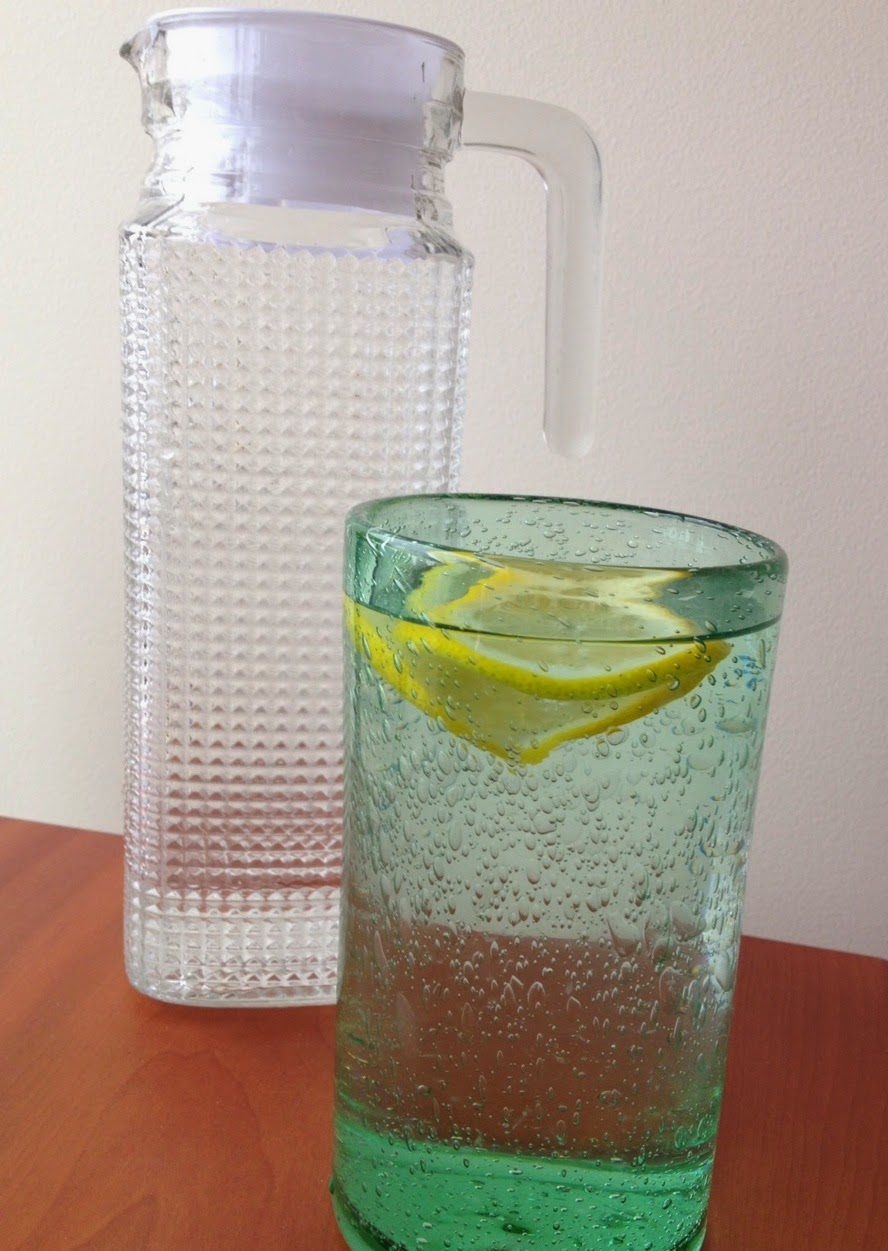
It was hard at first but I'm starting to crave it. Sometimes I add fresh lemon juice for taste, or a slice of lime or lemon to make it pretty. Pretty counts.

Water is so important to just about every aspect of health, including motility. After all: Water flows. It’s silly to expect your bowels to operate in a regular flow pattern if they are lacking water. 

Plus, the whole job of the large intestine is to pull water (and the nutrients it contains) out of the stool prior to elimination. 

Imagine if the stool is low in water to begin with? The colon just might want to hold on to that stool for as long as possible, straining to extract every last drop.


“Hold on” is the operative phrase in the previous sentence. And it’s not just about poop. Holding on—to people, objects, feelings, the past—is common in people with C. There is a huge emotional component to constipation that needs to be addressed if motility is to improve. One way to do this, interestingly, is by drinking more water.


This was explained to me by a wise young woman named Chaya Leia Aronson. Chaya is a registered nurse, Reiki practitioner and certified practitioner/teacher of the Arvigo Techniques of Maya Abdominal Therapy. I went to see her for an abdominal massage two weeks ago (my first time ever) and again, yesterday. (Maya Abdominal Massage, by the way, is amazing. If you’ve got belly issues, I highly recommend it.)


At our initial meeting, Chaya noted from my health questionnaire that I don’t take in a lot of H2O. That’s for damn sure. For decades, it’s been no secret that “I need to drink more water.” Many of my clients are in the same boat (water, water everywhere…) and I’ve successfully counseled them on improving their hydration status. But when it came to following my own advice, not so much. 

Here’s a list of my main excuses:


•I don’t like the taste of plain water.

•I’m never thirsty.

•I don’t drink with meals because it dilutes the digestive juices.

•I’d rather drink tea.

•Herbal tea counts.


That kind of thinking kept me stuck in a chronic state of dehydration for most of my life...until something Chaya said struck a deep and resonant chord in me. She said that in her experience, she has observed that women who don’t drink enough water often are anxious, and often have a hard time allowing themselves to experience their emotions.


Epiphany.


She also said that the choice to drink water—the very act of drinking it—is a way of nourishing yourself and, in particular, your emotional self. As a symbol (in dreams, for example) water represents feelings. The idea that drinking water equals giving yourself permission to feel your feelings, well, that’s a million dollar idea, baby. That’s a key.


How many adults with IBS-C suffered trauma of some kind in childhood, and have been stuffing or suppressing those emotions ever since? Possibly most, according to the research. (To read more about it, try: Early life risk factors that contribute to irritable bowel syndrome in adults: a systematic review.)


Anyway, sitting there in Chaya’s warmly lit office as we spoke about water and feelings, I realized that what she was saying made total sense. And I knew I was ready.


I listened carefully as she introduced the concept of Hydration Practice. Similar to yoga practice or meditation practice, hydration practice means consciously committing to nourishing yourself with water. Beautiful idea!


The goal is to drink 2 – 3 quarts of water per day. Chaya said I could start with just two (phew!) and suggested I get the first quart into me first thing in the morning, via a process she calls “front-loading”. Before tea, before food: 1QT of water. Just glug it down. And then after lunch, in the afternoon: Quart number two.

So I started. I bought a nice glass 1-liter pitcher; I bought a lemon. I bought a pretty green glass to drink out of at work. 

By now, I’ve been doing hydration practice for two weeks and the weird thing is, I really like it! At first my tummy felt uncomfortably full from the morning quart, but now, it doesn’t. My famous craving for tea is less. My dry skin looks plumper and pinker. And my motility…

Well, the motility is a work in progress. Adding two quarts of water a day has not produced an overnight miracle. But I expected a cumulative effect. 

It’s going to take some time for my formerly perma-shriveled, water-starved cells to get used to the fact that they don’t have to conserve every microscopic particle of H2O that comes their way. There’ll be more where that came from.

The drought is over. It’s a miracle.


Tuesday, March 17, 2015

My lactulose breath test.

I was on the fence about doing a lactulose breath test. 

There were a few reasons for the ambivalence. 

First, based on my symptoms, I was pretty sure I had SIBO anyway. The GI doc I'd seen had warned me the test was really expensive ($375 if I did it through her with Commonwealth Labs). She also said she was ready to treat me without testing and even gave me a prescription for Rifaxamin before I left her office. 

Considering her opinion, and knowing that one accepted way of diagnosing SIBO is retrospectively—in other words: if symptoms resolve on treatment, you have SIBO—why spend the extra dough on testing?

The second reason for my hesitation was that some controlled studies (comparing the results of people with and without IBS) have cast doubt on the validity of the lactulose breath test itself. There may be a high rate of "false positives" in IBS-free people. This makes some experts think the lactulose test may be more useful for ruling out SIBO (when a negative result is found) rather than for diagnosing it from a positive result. So again, why should I bother?

Third, the test takes 2 or 3 hours to do at home and requires a restrictive prep. Part of the prep is to not take any antibiotics (including herbal), probiotics or laxatives for TWO WEEKS prior to testing. WHAT? Magnesium and herbal laxatives help make my life possible!

And there was the restrictive prep diet: your choice of eggs, chicken, fish, white rice (unless you are grain-free) and white bread (unless you are gluten free) the day before you test. That's it. A little salt and pepper is permitted, but no honey, sugar, dairy, fruit, vegetables, whole grains, etc. Nada. Plus you have to fast on water for the final 12 hours preceding the test.

It was a lot to wrap my mind around, but in the end, I decided to do the test anyway, albeit through a different lab and with a different doctor who only charged me $130 (that's more like it).

Why did I make this decision? Because inquiring minds want to know! I wanted that formal diagnosis. If the test came out positive, it would give me a baseline, too. And there's nothing like a positive test to confirm a diagnosis and help keep the patient on track.

I took the test the second week in February, sent it in to Genova Diagnostics and the results came back on the 17th. Positive. It was official. I have SIBO.


These are my results. The graphs show my baseline breath levels of hydrogen and methane gasses before drinking a lactulose solution, and my production of these gases over the 2-hour post-imbibing period. In the case of a positive test (which this is) the type of gas produced indicates which type of microbe is overpopulating the small intestine.

As suspected, I am a methane producer. IBS-C people usually are. (My proud motto"My farts don't smell"was another tipoff, since methane, as I recently learned, is an odorless gas.

As you can see, I started out with high baseline levels of methane. These levels decreased initially, but when the lactulose hit my distal ("far away") ileum, they shot up again. Hydrogen levels shot up at that point, too. This indicates the presence of both methane-producing and hydrogen-producing microbes, although the methanogens are prominent.

At my house, everybody eats.

I found it a bit confusing why at first, my breath gas levels went down but apparently that is not uncommon, according to this excellent article from Allison Siebecker (my hero) and her research partner Steven Sandberg-Lewis, which helped me make sense of the results:


Anyway, considering that I began with elevated baseline levels, the reported "mild increase" of 14 points suggests I have a mild-to-moderate case of SIBO.

It was good to have confirmation. A little weird (bacteria are taking over my body!) but good. I suppose I could feel invaded, but I decided instead to position myself as a wonderful host. The hostess with the mostest, you could say.

Nevertheless, I've had it with these guests. Hence I came up with a plan: Herbal antibiotics, biofilm disruptors, digestive support and motility support (a key component). At this writing, I am, in fact, nearing the end of a 30-day protocol that I will share in forthcoming posts. So stay tuned. And leave a comment below if you're thinking about doing lactulose testing, or have any questions. I'd love to hear from you.

xo Diana